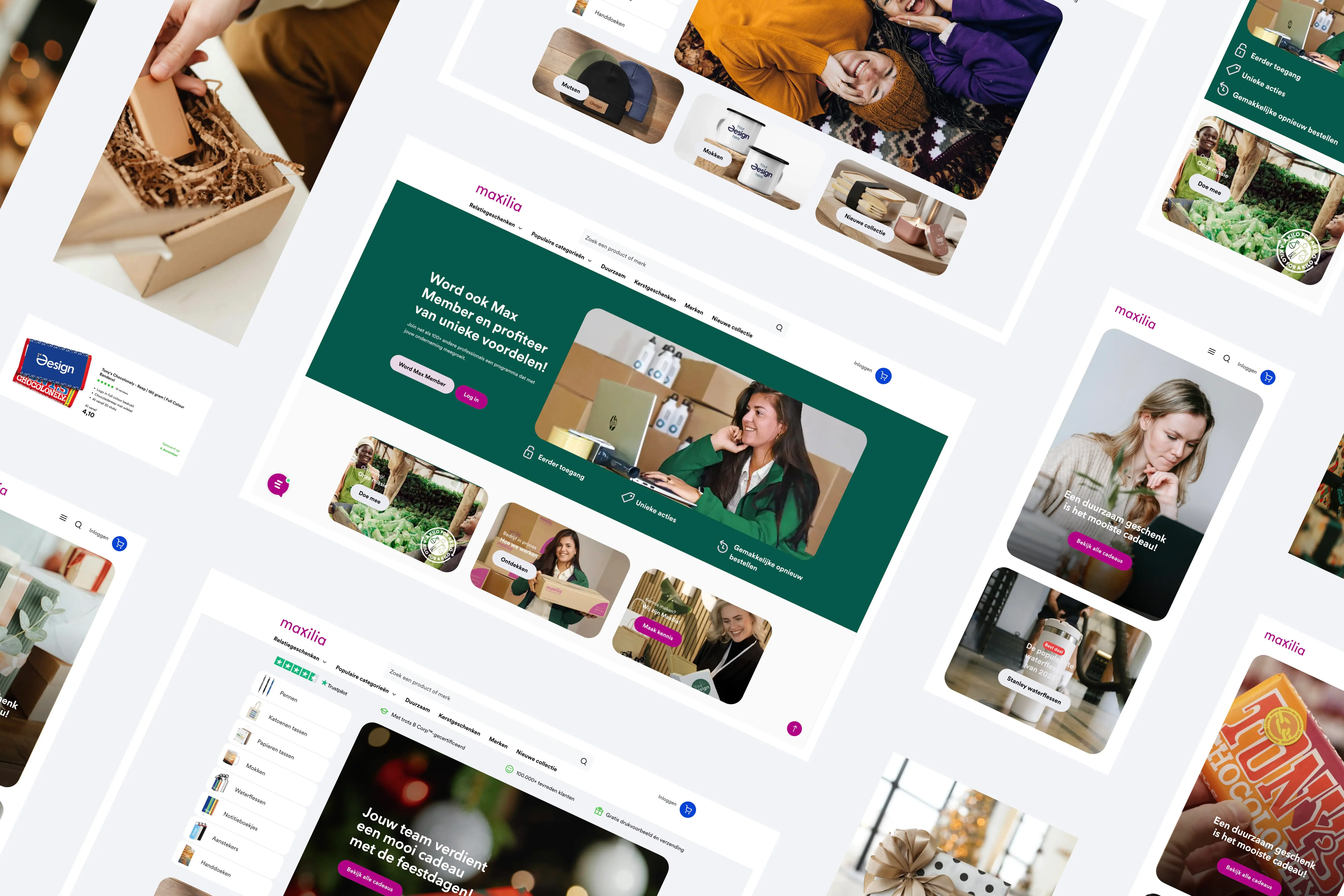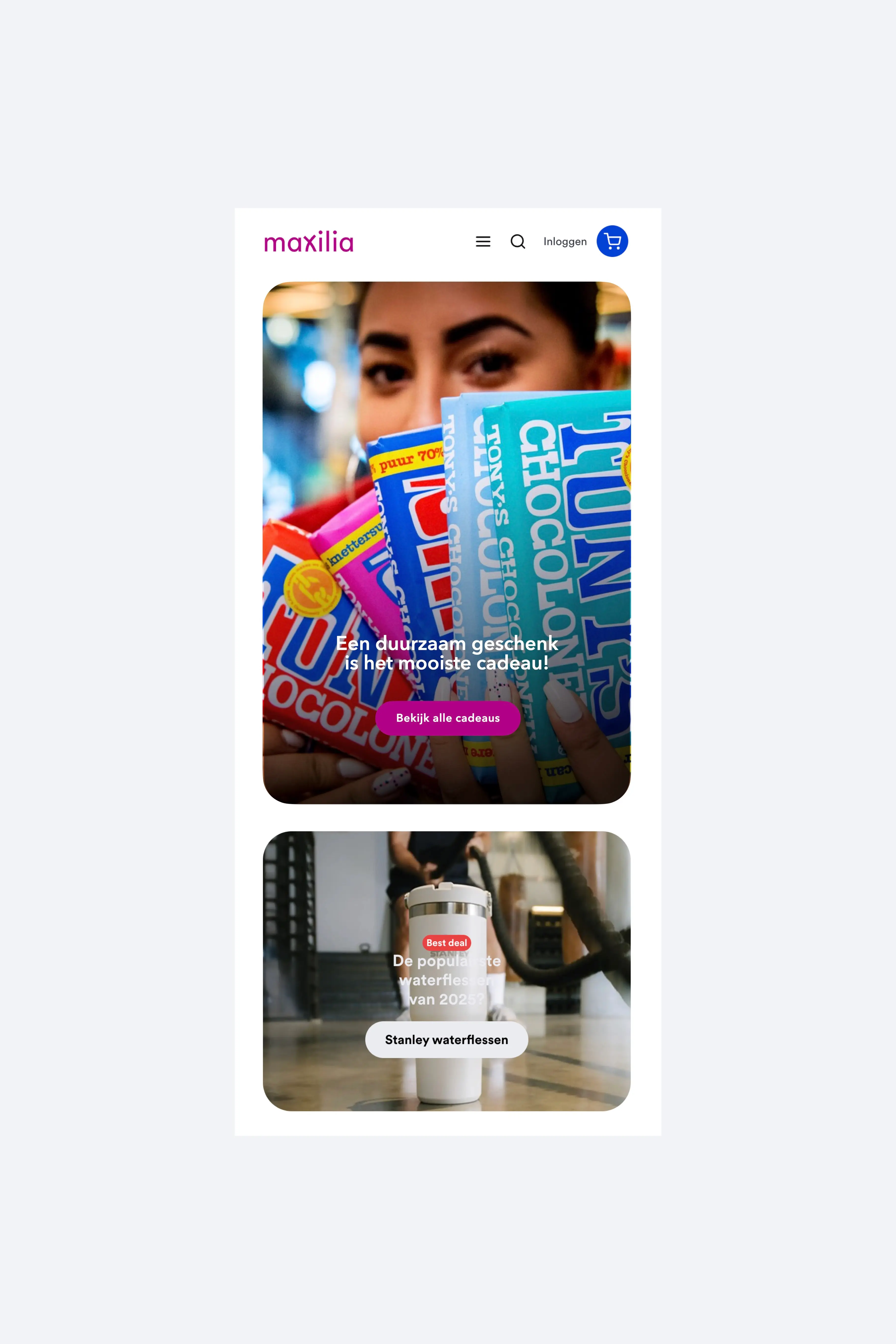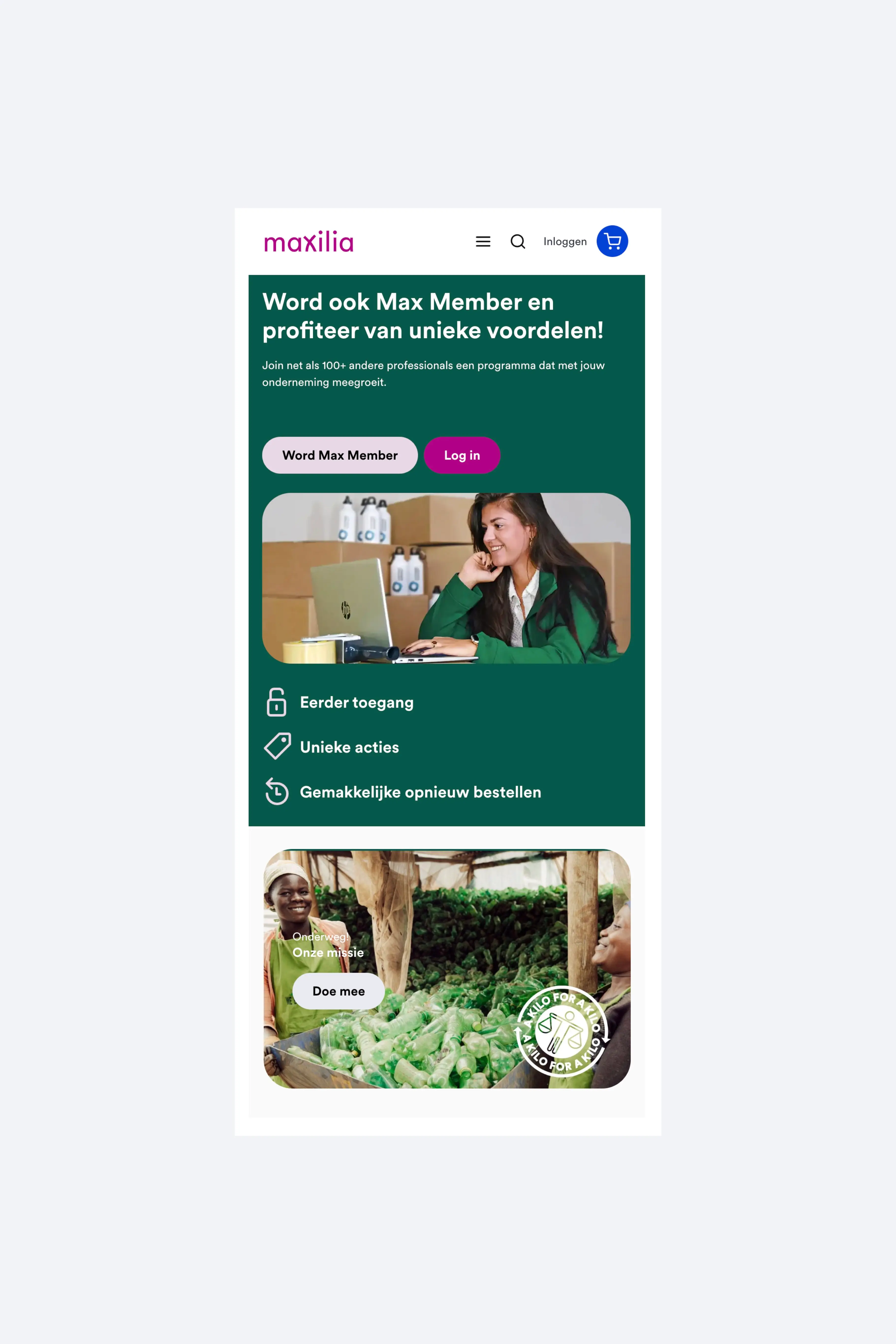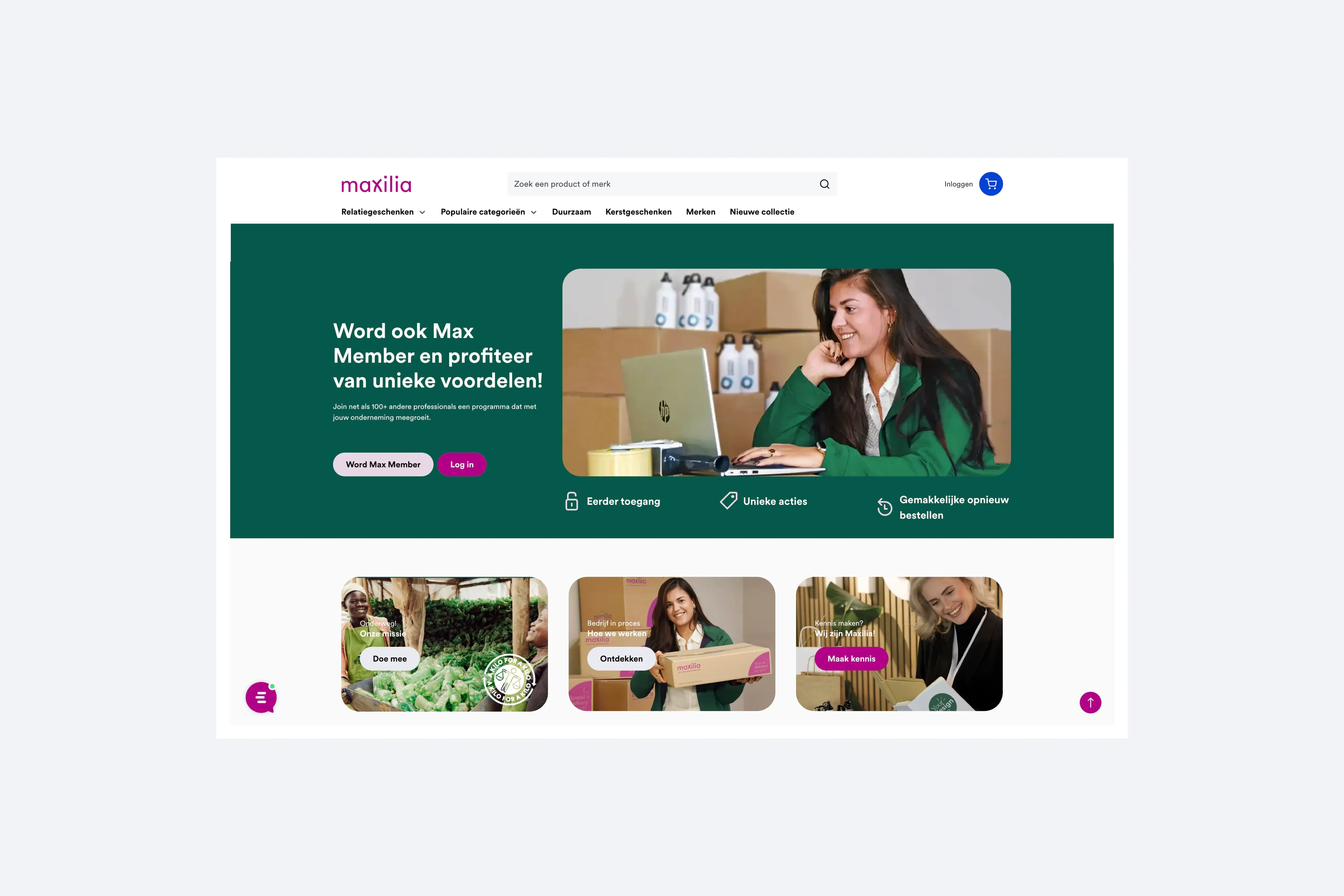
Maxilia modernizes its operations and IT landscape. Open Commerce supports replatforming and the creation of a flexible, future-proof team.
Open Commerce was involved in two phases. First, we mapped core processes through workshops, process mapping, and system analysis to identify real business needs and critical requirements. Then we built and guided a scalable in-house nearshore IT team, including interim CTO support, enabling Maxilia to continue its digital transformation independently.
The project optimized domains such as customer success and personalized marketing, merchandising, warehouse and inventory management, and online sales channels. Using service blueprint mapping and event storming, we identified inefficient workflows and defined high-level requirements. This formed the basis for a composable software landscape with Shopware as the core platform, integrated with Hubspot, WMS, and other tools.
Thanks to this approach, Maxilia now has a robust, flexible IT and e-commerce landscape aligned with its business processes and sustainability goals. The IT team is trained, ownership is secured, and the organization can independently continue the replatforming while improving operational efficiency and customer focus.
Introduction
Maxilia, a leading company based in the Netherlands, specializes in promotional products and corporate gifts with a strong emphasis on sustainability. They prioritize contributing to a better world by offering products made from recycled materials and designed for longer use. Maxilia primarily serves small to medium-sized businesses (SMBs), offering smaller order sizes while providing exceptional personal service. Their commitment to customer satisfaction is evident through their dedication to personal assistance and ensuring every client is satisfied. Operating in the Netherlands, Germany, Italy, and France, Maxilia has established itself as a trusted partner for businesses looking to promote their brand in an eco-friendly manner.
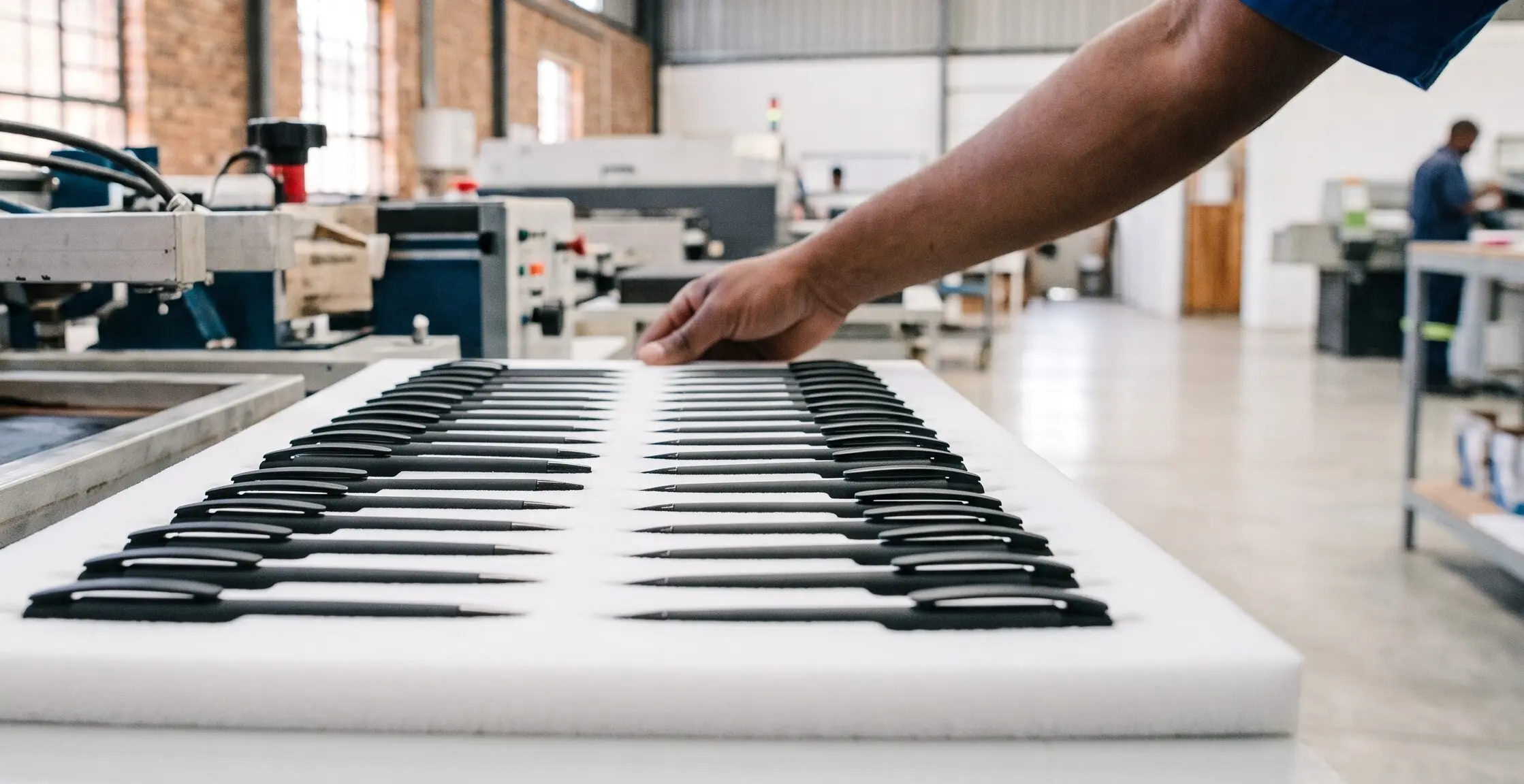
Maxilia blends the use of an extensive network of suppliers with its own in-house printery. This combination allows them to offer a wide range of products while maintaining high quality control and faster turnaround times through their self-printed items, giving them a significant competitive advantage.
Open Commerce played a leading role in preparing for the replatforming, as well as building a scalable in-house nearshore IT team, by placing an interim CTO and focussing on team enablement.
Challenges
Before engaging with Open Commerce, Maxilia faced several significant challenges that impeded their growth and efficiency. Their existing system was a monolithic can-do-all application which combined a client-facing webshop with an ERP-, OMS-, and CRM functionality, as well as a host of other functionalities. This all-in-one system, developed by an IT team that had since turned over due to natural churn, had become unmaintainable and outdated. Add to that the acquisition of a printery a few years earlier, which had not received the necessary IT upgrades.
On the business side, a significant challenge was inefficiencies in their customer service operations. Despite their commitment to providing excellent personal service, this dedication resulted in bottlenecks. Customer success managers, account managers, and supply managers spent excessive time and effort catering to customers. Requiring multiple calls to finalize and ship an order, with repeated contact moments to check order statuses due to a lack of self-service capabilities.
Overall, Maxilia needed a more robust and integrated solution to manage their operations, support their extensive supplier network, and streamline their in-house printing capabilities. They sought a platform that could enhance user experience, improve the level of self-service, and scale with their growth while aligning with their values of sustainability and exceptional customer service.
Initial request and assessment
The interim-CEO of Maxilia approached us as they were considering a re-platforming initiative. Open Commerce provided a Solutions Architect who reviewed the existing systems and the proposed plans for migrating the platform. This review included a detailed assessment of the current monolithic application stack, as well as the no-code and self-built tools in the printery.
The outcome of our code- and requirements review revealed several gaps in the proposed plans, both in terms of the technology to be delivered and the migration strategy. Additionally, we identified discrepancies between the planned requirements and the actual needs of the business. Based on these findings, we recommended taking a step back to first take stock of the current situation.
Last, due to natural churn a new IT team needed to be built that was able to maintain the existing landscape, as well as building the new one. We worked closely with one of our trusted partners to put together a multidisciplinary team with project management, data engineering, application management, as well as developers.
Capturing the true requirements
After Maxilia's management took the bold step of pausing the project to reassess their situation, we set out to understand the true requirements. The initial effort to re-platform Maxilia was hindered by incomplete requirements, which were based on frustrations with the current system rather than a reflection of actual needs of an evolving business. To address this, we focused on capturing the true requirements essential for Maxilia’s success.
We assembled a team of domain experts from various departments within Maxilia, including supply, merchandising, customer success, finance, and others. These experts served as the voice for their respective areas, ensuring that all critical requirements were represented.
We then conducted several workshops, utilizing methods such as service blueprint mapping and event storming. These workshops, which lasted several days each, were designed to thoroughly map out the requirements. Each workshop started by focusing on the current ("as-is") situation, followed by mapping out the future goal ("to-be") situation. This approach helped us identify the gaps between the current state and the desired future state.
The outcome of this phase was a comprehensive set of diagrams that visually represented the internal processes as they were and as they should be. These diagrams also clearly highlighted the current bottlenecks, such as why people needed to keep calling, and why certain orders took a long time to process. The business learned a lot about itself, discovering opportunities for optimization even without technological improvements.
From these workshops, we developed a high-level list of requirements that outlined the processes they wanted to address and the functionality needed to support those processes. With this detailed understanding, we were prepared to proceed to the next phase, which involved performing a gap analysis. The gap analysis would focus on the existing processes and determine the technology needed to bridge the gap between the current state and the desired future state.
Building a composable software landscape
Following in-depth requirements and gap analysis, we set to design a balanced composable application landscape that effectively addresses various critical domains: Customer Success and personalized communication, merchandising, online sales channels, and warehouse and inventory management.
Our approach was centered around understanding the unique needs of each domain and selecting off-the-shelf solutions that aligned with these requirements. We focused on ensuring each system could integrate seamlessly into our broader IT infrastructure while providing the flexibility needed to adapt to our specific business processes.
Key requirements and objectives
For Customer Success and personalized marketing, we emphasized the need for comprehensive customer data management, multi-channel communication capabilities, and efficient workflow handoffs between departments. Ensuring personalized customer attention and detailed performance reporting were also crucial.
In the merchandising domain, we sought a solution that offered flexibility in setting up diverse product models and a strong focus on core product information management. Capturing complex product data accurately was essential to meet our merchandising needs.
In the area of warehouse and inventory management, we focused on solutions that could handle incoming orders, order picking, and workflow management efficiently. We aimed to enhance our existing infrastructure with cloud solutions where possible, managed on-prem hardware where needed, and system redundancy to ensure continuity and minimize outages.
For our online sales channels, we required an e-commerce platform that adapted to our well-defined business processes, providing high self-service capabilities for our Maxilia colleagues, and customers alike, while allowing IT teams to customize the platform as needed. Flexibility and functionality were key factors in our selection process.
Implementation and integration
By focusing on these domains and selecting solutions that met our specific needs, we successfully built a composable ecommerce landscape with Shopware as the main sales channel for customers. This approach enabled us to integrate various systems cohesively, enhancing our overall operational efficiency and effectiveness. Our emphasis on flexibility and alignment with business processes ensured that each component worked harmoniously within the broader IT infrastructure.
The result is a robust and adaptable software landscape that supports our goals in Customer Success and personalized marketing, Merchandising, online sales channels, and warehouse and inventory management. This composable approach not only meets our current needs but also positions us well for future growth and technological advancements.
Implementation and change management
For implementation we adopt an approach we call "from the core processes up." This approach reverses the traditional method of web shop implementations, where typically, design and e-commerce platforms are implemented first, followed by connecting other solutions like the PIM and ERP. Instead, we took on first the applications that enabled crucial processes.
By starting with these core systems, the business processes are aligned with the tools used by different departments. This method allowed us to work out how these systems should function and the business processes around them before layering on the e-commerce solution. This approach provides several advantages:
- Business-first adaptation: The e-commerce platform adapts to the business processes rather than the business adapting to the e-commerce platform. This alignment ensures that the sales tool reflects and supports the actual workflows and needs of the business.
- Front-loaded data: Ensuring that all necessary data is ready and available from the core systems means the e-commerce platform can access and display this data without delays, streamlining the implementation phase.
Transition and handoff
Given that this was an interim job, our primary mission was to make ourselves replaceable from day one. This approach enabled us to prepare for a smooth transition out, even before the re-platforming was completed.
As our time-bound interim period was coming to an end, we were confident in our ability to hand off responsibilities seamlessly. We had been preparing the IT team and the wider organization for our departure throughout the project. In the IT team, we ensured that all members understood their roles post-interim. Since the organization size of Maxilia does not warrant a full-time CTO, the management of the IT team would transition to the CFO, with daily operations managed by the lead developer and the project manager.
From the outset, we focused on training these key individuals to take over the reins. We emphasized the importance of enforcing processes and practiced constant repetition of our practices. This included consistent approaches to sprint planning, feedback handling, stakeholder engagement, and managing feature requests from the organization. By doing so, we aimed to make the IT team self-sufficient and, to some extent, self-steering.
With the conclusion of the re-platforming not of our project scope, our focus was to enable the organization, getting them ready to continue the re-platforming efforts after we left. We successfully established an IT team equipped with all the artifacts, documentation, diagrams, and decisions needed to carry the re-platforming to conclusion.
By adopting a methodical and collaborative approach, we not only facilitated the technological transformation but also empowered Maxilia's internal teams to take ownership of the new project. This preparation ensured that the organization could continue to thrive independently, long after our involvement ended.