
🎧 Listen to the full episode here.
For years, B2B marketing operated on a simple premise: build a loud enough brand and the leads will follow. It works, but it doesn’t scale. Budgets came under scrutiny and every euro of spend needed to justify its contribution to the bottom line.
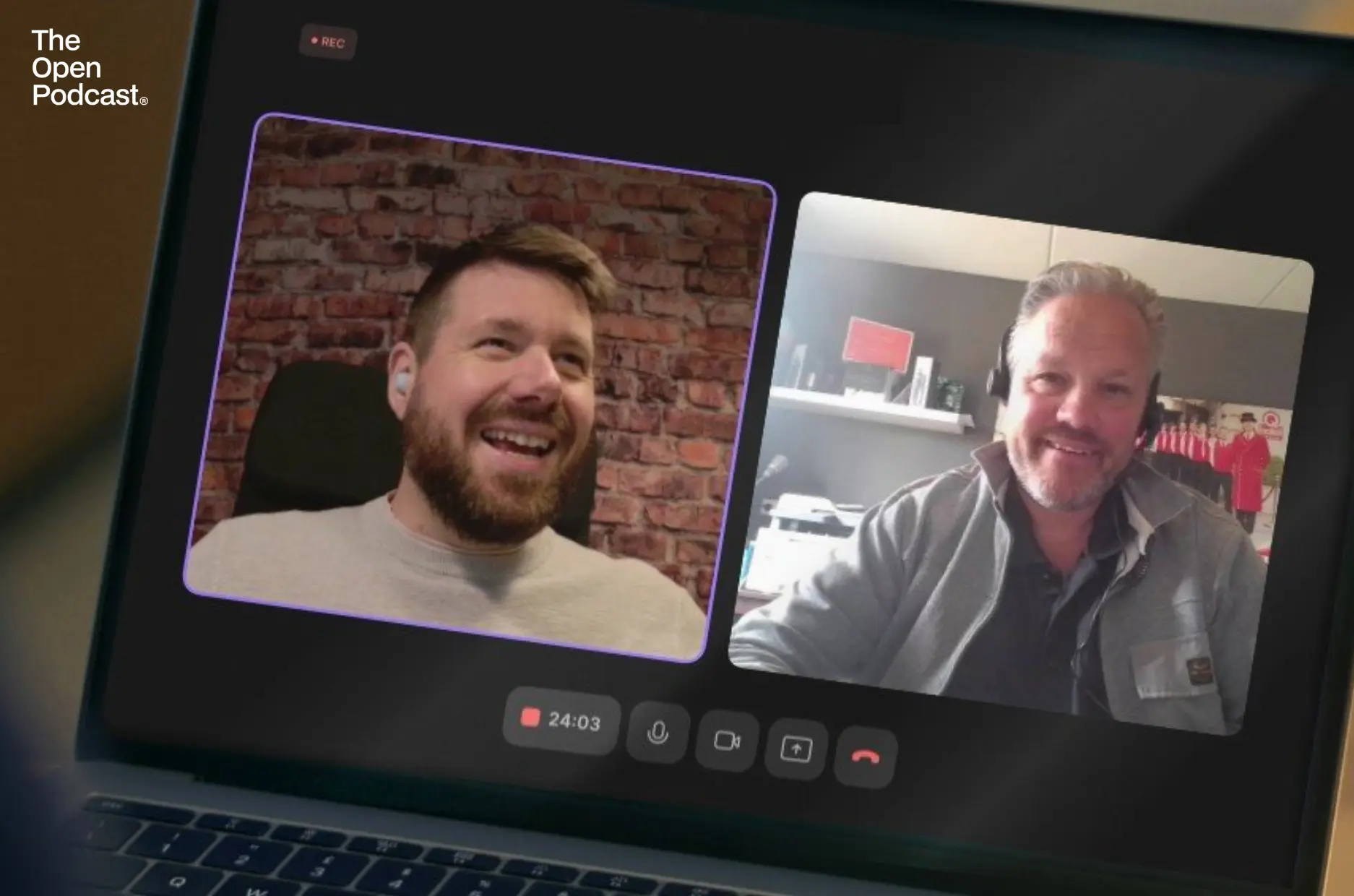
Sander Mangel sits down with Jorg Wiedijk, head of SDR at Worldline, to explore how the company is flipping the traditional marketing triangle and moving into Account-Based Marketing (ABM).
More than a buzzword
ABM is more than a buzzword. It is, by design, a B2B discipline. It is a shift in how you identify, attract, and prioritize the accounts that actually move the needle. To get it right, Jorg walks us through the first 3 phases of what he calls the “flipped funnel.” The approach starts narrow, with a tightly defined list of high-value accounts, and builds outward from there across 6 phases:
- Identify: Define your target accounts and the specific people inside them worth reaching.
- Awareness: Get on their radar early with content that speaks to their challenges.
- Intent: Spot which accounts are actively researching solutions like yours and prioritize accordingly.
- Engage: Build the relationship through personalized, multi-touch outreach designed to earn trust.
- Handoff: Pass warm, qualified leads to sales with full context so nothing gets lost in translation.
- Retargeting: Keep working existing accounts for cross-sell and upsell opportunities.
Influence the influencers
The first phase of ABM is identify. This goes far beyond writing down the names of companies to target, and their CEOs. Traditional marketing chased the “decision makers.” However, in ABM, the myth of the lone C-suite executive signing off a 6-figure contract is exactly that: a myth.
Jorg highlights that on average, for Worldline, a high-value B2B deal requires the alignment of 9 to 11 stakeholders. This is what he calls the buyer group.
- The Minus-Ones: The managers and specialists who report to the C-suite. They are tasked with the actual problem-solving and doing the research long before a proposal reaches the board.
- The External Influencers: In large-scale migrations, your prospects are often talking to the “Big Five” (Deloitte, Accenture, EY). For smaller companies, this might be an independent consultant, a fractional CFO, or even a trade association that shapes purchasing decisions long before a vendor is ever contacted. If you aren't providing value to the people your prospects trust, you aren't truly in the room.
Personas vs groups
In ABM, a persona is not a replacement for a buyer group. It is a subset of it and every person has a distinct narrative.
“Think as if you are the one we want to target.” says Jorg on reverse-thinking the buyer's journey.
What keeps the Head of Technology awake at night is different from the CFO’s concerns regarding ROI. Getting this phase right means identifying all relevant stakeholders before any outreach begins.
Jorg's tool of choice for building that list is LinkedIn Sales Navigator. For each target account, he uses the Account IQ feature, feeding it a product page URL, which then analyzes how well that account fits the solution.
From there, Lead IQ maps which individuals within the account are most relevant to that product, surfacing the right buyer group members by role and function. The result is a prioritized list of people to engage, built before a single message is sent.
From loud to top of mind
Once the buyer group is mapped, the next phase is awareness. Jorg is quick to point out that awareness in ABM is fundamentally different from awareness in consumer marketing.
“The awareness phase is quite a difficult one because if I was at McDonald's, it makes sense.” Jorg explains. “Everybody knows McDonald's, everybody knows what it stands for and everybody knows either you like it or you do not like it. But for B2B, you don't need everyone to know who you are. Awareness is all about becoming top of mind [in your industry].”
That top-of-mind presence needs to hold across all 3 stages of the buyer journey:
- Awareness: Your prospect is not looking for you yet. They are searching for answers to a challenge. This is where thought leadership earns its place: white papers, webinars, and content that speaks to their problems, not your product.
- Consideration: The buyer group has aligned around a challenge and is now actively looking for providers. You want to be on the shortlist. Fact sheets, high-level demos, and solution-focused content do the work here.
- Decision: A shortlist has been drawn up and they are ready to talk. This is where detailed demos, customer references, and direct conversations close the gap.
Your fill-the-form-to-download is hurting your marketing
The buyer journey used to start with a Google search. Now it starts with a prompt. Research from Forrester shows that 89% of buyers have adopted generative AI and are using it across different stages of the buying process.
They are asking questions like "what are the best solutions for payment compliance in Europe?" or "which vendors are leading in B2B checkout optimization?" They are not browsing. They are asking, and they expect a direct answer.
This has shifted the priority from Search Engine Optimization (SEO) to Generative Engine Optimization (GEO). To build awareness, your brand must ensure its insights are crawlable by the bots that feed the large language models your buyer group is already using to do their research.
One of Worldline's tactical shifts was un-gating content. For years, B2B companies have hidden their best insights, such as white papers, reports, case studies, behind lead generation forms. While this collected emails, it made the content invisible to AI discovery tools. By putting that information directly on the website in crawlable formats, you give AI the raw material it needs to surface your brand when buyers are asking the questions you should be answering.
As Jorg and Sander note, when a prospect prompts "who are the leading providers for B2B checkout?", you want to be the answer.
Signals over noise
If the buyer group is the who and awareness is the how, then intent is the when.
In any given month, only a small percentage of companies fitting your Ideal Customer Profile are in a buying window. ABM uses intent signals to tell you where to accelerate and where to wait. Using tools like LinkedIn Sales Navigator, 6sense, or Apollo, marketers can track:
- Which accounts are repeatedly visiting high-intent pages (like pricing or technical documentation).
- Which stakeholders are engaging with competitors or specific industry keywords.
- Which buyer group members are suddenly expanding their network within your specific niche.
The train has departed
The shift in marketing is not just a trend. It is a necessity for companies operating in the B2B space. Success no longer goes to the brand that is the loudest in the room. It goes to the ones who show up with genuine expertise, share it freely, and build trust on those foundations. Convincing your Ideal Customer to talk to you means identifying the full buyer group before outreach begins, building authority in the places your buyers actually look, and reading intent signals with enough precision to act at the right moment.
“The train has departed.” Jorg declares. The question is: are you on it?
In part 2 of this podcast, Sander and Jorg cover the final three phases of ABM: Engage, Handoff, and Retargeting, and how to move from capturing signals to closing deals.